Nasal Cavity & Nasopharynx
Viral Upper Respiratory Infection
An acute viral infection of the upper respiratory tract causing rhinorrhea, nasal congestion, cough, and often sore throat or fever. Most cases are self-limited and require supportive care rather than antibiotics.
Clinical Vignette
Another runny nose—or something more?
Recognize the typical evolution of a viral upper respiratory infection and identify the findings that would suggest an alternative diagnosis or bacterial complication.
A 3-year-old presents with 3 days of nasal congestion, rhinorrhea, and cough. The illness began with a mild sore throat followed by increasing nasal symptoms.
The child had a temperature of 38.2°C (100.8°F) yesterday but is afebrile today. Oral intake is mildly decreased, but urine output remains normal and the child continues to play intermittently.
Examination shows nasal congestion and rhinorrhea with mild pharyngeal erythema. The child is breathing comfortably with clear lungs, normal oxygen saturation, and no focal bacterial source on examination.
The parent is concerned because the nasal discharge, which was initially clear, has become thicker and yellow-green.
Your clinical reasoning task
Does the change in nasal discharge suggest a bacterial infection, or is this child still following the expected course of an uncomplicated viral URI?
Anatomy & Localization
Localize the common cold to the upper airway
Viral URIs primarily involve the mucosal surfaces of the nose and nasopharynx, producing rhinorrhea and congestion without primary lower-airway disease.
Nasal cavity
The nasal mucosa is a major site of viral infection and the source of many of the classic symptoms of a URI. Mucosal inflammation increases nasal secretions and contributes to congestion and rhinorrhea.
Nasopharynx
The nasopharynx lies immediately posterior to the nasal cavity and is another important site of upper-airway infection. Inflammation here contributes to nasal obstruction, drainage, and throat irritation.
Oropharynx
Pharyngeal irritation commonly accompanies a viral URI and may produce sore throat, particularly early in the illness. Rhinorrhea and cough occurring with pharyngitis strongly support a viral syndrome.
Localization Framework
Follow the symptoms through the upper airway
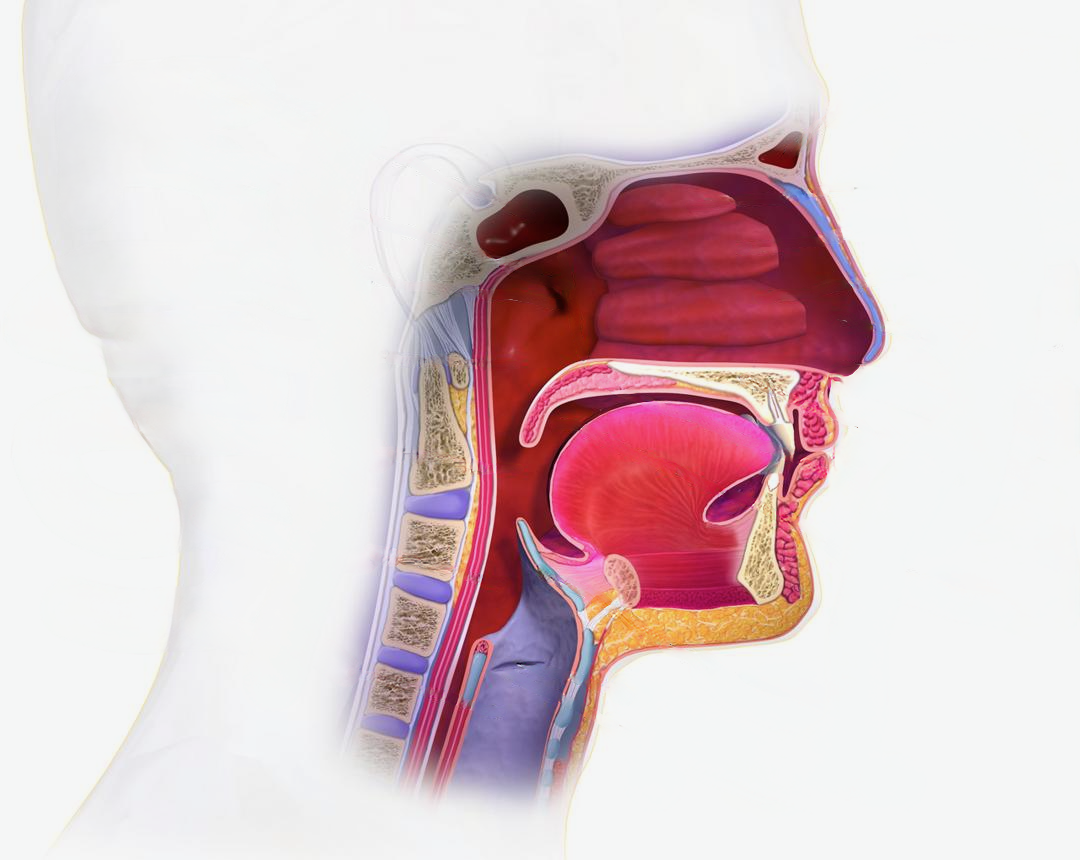
Sagittal anatomy of the upper airway and adjacent structures.
Adapted by PediAtlas from OpenStax, Anatomy & Physiology, licensed under CC BY 4.0. PediAtlas annotations and modifications added.
Clinical Anatomy
Anatomy → Complication
Still an upper-airway process
- • Rhinorrhea
- • Nasal congestion
- • Sneezing
- • Mild sore throat
- • Cough associated with upper-airway secretions
Look beyond a simple URI
- • Stridor or barking cough → consider laryngeal involvement
- • Wheezing → consider lower-airway involvement
- • Focal crackles → consider pulmonary disease
- • Hypoxemia or significant respiratory distress
- • Focal findings suggesting a bacterial complication
Clinical Localization
A cough does not automatically make this a lower-airway infection
Connected Anatomy
The upper airway connects directly to the middle ear
Pathophysiology
The symptoms come largely from the immune response
Viral infection of the upper-airway epithelium triggers a local inflammatory response that produces mucosal edema, increased secretions, and the familiar symptoms of the common cold.
Viral exposure
Respiratory viruses reach the nasal or nasopharyngeal mucosa through contact with infected secretions or respiratory particles.
Epithelial infection
Viruses infect susceptible respiratory epithelial cells. Rhinovirus commonly begins in the nasopharynx and spreads through the nasal mucosa.
Inflammatory signaling
Infected epithelial cells release cytokines and chemokines that activate the local immune response and recruit inflammatory cells, including neutrophils.
Mucosal inflammation
Inflammation produces vascular changes, mucosal edema, and increased nasal secretions, creating congestion and rhinorrhea.
Symptoms evolve
Rhinorrhea, congestion, sore throat, sneezing, and cough develop as inflammation and secretions involve the continuous upper-airway mucosa.
Key Mechanism
The immune response causes much of what makes the patient feel sick
Rhinorrhea
Inflammatory signaling increases nasal secretions. Early in the illness, these secretions are often thin and clear but may become thicker as the inflammatory response evolves.
Congestion
Mucosal inflammation and vascular engorgement narrow the nasal passages, producing the sensation of obstruction even when the airway is filled with relatively little mucus.
Cough & sore throat
Inflammation of the pharyngeal mucosa and movement of upper-airway secretions contribute to throat irritation and cough. Cough may persist after the most prominent nasal symptoms begin to improve.
High-Yield Myth
Yellow or green mucus does not automatically mean bacterial infection
Clinical Translation
Follow the trajectory—not the color of the mucus
History & Physical
The trajectory is often more informative than any single symptom
Viral URIs evolve over several days. Recognizing the expected sequence, peak, and gradual improvement helps distinguish an uncomplicated cold from a bacterial complication or an alternative diagnosis.
1. Early illness
Symptoms may begin with sore throat, sneezing, or mild nasal irritation before congestion and rhinorrhea become more prominent. Fever may occur, particularly in younger children, but is not required.
2. Symptoms peak
Over the next several days, nasal congestion, rhinorrhea, and cough become more prominent. Symptoms often peak around the third day of illness, and nasal secretions may become thicker or mucopurulent.
3. Gradual recovery
Symptoms should then follow an overall improving trajectory. Nasal symptoms and especially cough may persist after the child otherwise begins to feel better, so complete resolution is not expected immediately.
History clues
- • Rhinorrhea and nasal congestion
- • Sneezing
- • Sore or irritated throat
- • Cough
- • Fever may occur but is not required
- • Mild decrease in appetite or activity
- • Sick contacts or recent respiratory illness exposure
Physical examination
- • Nasal congestion and rhinorrhea
- • Mild pharyngeal erythema
- • Comfortable or mildly ill appearance
- • Hydration status generally preserved
- • No focal pulmonary findings in an uncomplicated URI
- • No significant respiratory distress or hypoxemia
- • Examine the ears for evidence of acute otitis media
Expected Course
A cold can last longer than many families expect
Viral URI symptoms commonly persist beyond a few days, particularly in children. Improvement in the child's overall trajectory is more reassuring than expecting every symptom to disappear by a specific day. Cough may be one of the last symptoms to resolve.
Follow the Trajectory
Improving, persistent, or worsening?
When evaluating a child with URI symptoms, ask how the illness is changing over time. An uncomplicated viral URI should eventually follow an overall improving trajectory. Symptoms that persist without improvement, become unusually severe, or worsen after initial improvement should prompt consideration of a complication or alternative diagnosis.
Differential Diagnosis
When is a cold not just a cold?
Many pediatric illnesses begin with cough, congestion, rhinorrhea, or sore throat. The symptom pattern, severity, examination, and trajectory help distinguish an uncomplicated viral URI from its common mimics and complications.
Allergic rhinitis
Sneezing, clear rhinorrhea, nasal or ocular itching, and a recurrent or seasonal pattern favor allergic disease. Fever and systemic illness are not typical.
Influenza / COVID-19
Both can overlap substantially with a routine URI. More prominent fever, systemic symptoms, known exposure, or epidemiologic context may increase suspicion, and testing may matter when the result would change treatment or infection-control decisions.
Acute bacterial sinusitis
Consider when URI symptoms persist without improvement, begin with an unusually severe pattern, or worsen after initial improvement. The overall trajectory is more informative than the color of nasal discharge alone.
Acute otitis media
A viral URI can impair Eustachian tube function and predispose to middle-ear infection. New ear pain, otorrhea, or characteristic otoscopic findings should prompt evaluation for AOM.
Streptococcal pharyngitis
Prominent sore throat and fever without the typical viral features of cough and rhinorrhea increase suspicion for group A streptococcal pharyngitis. Testing should follow the clinical context and age of the child.
Pertussis
Early pertussis may resemble a mild URI, but progression to prolonged paroxysmal cough, inspiratory whoop, posttussive emesis, or apnea in young infants should shift the diagnostic approach.
Lower-airway disease
Wheezing, focal crackles, hypoxemia, tachypnea, or increased work of breathing suggest involvement beyond an uncomplicated upper-airway infection and should prompt consideration of bronchiolitis, asthma, pneumonia, or another lower respiratory process.
Diagnostic Framework
Start with pattern + trajectory
No single symptom reliably identifies every viral URI. Ask whether the combination of symptoms, examination findings, severity, and evolution over time fits an uncomplicated upper respiratory infection or whether another diagnosis better explains the clinical picture.
Common Complications
AOM and sinusitis often begin with the same viral URI
Acute otitis media and acute bacterial sinusitis may develop during or after a viral URI. New focal symptoms, an unexpectedly severe illness, failure to improve, or worsening after initial improvement should prompt evaluation for a secondary complication rather than assuming the original viral illness simply needs antibiotics.
Diagnostic Workup
The uncomplicated viral URI is a clinical diagnosis
Most children with a typical viral URI do not need laboratory testing or imaging. Testing should answer a specific clinical question rather than simply confirm that a respiratory virus is present.
First Question
Does this child actually need a test?
A well-appearing child with a typical combination of rhinorrhea, congestion, cough, and mild pharyngeal symptoms can usually be diagnosed clinically. Routine laboratory studies, respiratory viral testing, and imaging are not necessary for an uncomplicated presentation.
Typical URI
No routine diagnostic testing is required when the history, examination, and clinical trajectory are consistent with an uncomplicated viral upper respiratory infection.
Targeted viral testing
Testing for a specific respiratory virus may be useful when identifying the pathogen would change treatment, infection-control decisions, or management of a high-risk patient.
Alternative diagnosis
Additional testing should be directed by findings that suggest another diagnosis or complication rather than ordered routinely for the URI itself.
A Practical Testing Framework
Ask what the result would change
1. Typical presentation
Diagnose clinically and provide supportive care. No test is needed simply to prove that the illness is viral.
2. Would the pathogen matter?
Consider targeted testing when a specific diagnosis would alter treatment or infection-control decisions.
3. Does something not fit?
If the severity, examination, or trajectory is atypical, investigate the suspected alternative diagnosis or complication rather than expanding testing indiscriminately.
Routine labs
CBC, inflammatory markers, and other laboratory studies do not routinely help diagnose an uncomplicated viral URI. Their use should be driven by concern for another process or a more seriously ill child.
Routine imaging
Chest radiography and other imaging are not indicated for an uncomplicated upper respiratory infection. Imaging should be reserved for a specific concern suggested by the history or examination.
Testing Pearl
A positive viral PCR does not always explain today's symptoms
Molecular testing is highly sensitive, but respiratory viruses may be detected during prolonged shedding or in patients without symptoms. Interpret a positive result within the clinical context rather than assuming that detection proves causation.
Management
Support the child while the infection runs its course
There is no routine antiviral treatment for the common cold. Management focuses on hydration, comfort, relief of bothersome nasal symptoms, and avoiding medications that provide little benefit or unnecessary harm.
Hydration & rest
Encourage adequate fluids and allow activity according to how the child feels. Mildly decreased appetite is common; maintaining hydration is more important than forcing normal food intake during the acute illness.
Fever & discomfort
Acetaminophen or ibuprofen can be used when appropriate for age and clinical circumstances to improve comfort from fever, sore throat, headache, or other discomfort.
Nasal symptoms
Nasal saline can help relieve congestion and clear secretions. In infants and young children who cannot effectively clear the nose, gentle suction after saline may improve feeding and comfort.
Managing the Cough
Treat discomfort—not the sound of every cough
Cough is a common part of viral URI and may persist after other symptoms begin to improve. Treatment should focus on comfort while avoiding medications that have not demonstrated meaningful benefit in children.
Honey ≥ 1 year
Honey may reduce cough frequency and severity and can be offered to children older than 12 months as a simple symptomatic treatment.
Never honey < 1 year
Do not give honey to infants younger than 12 months because of the risk of infant botulism.
Antibiotic Stewardship
Antibiotics do not treat an uncomplicated viral URI
Antibiotics do not shorten the duration or reduce the severity of an uncomplicated viral upper respiratory infection. This remains true when nasal secretions become thick, yellow, or green. Antibiotics should be reserved for a diagnosed or strongly suspected bacterial complication.
Avoid Low-Value Therapy
More medication does not mean faster recovery
OTC cough & cold products
Routine cough and cold medications provide limited benefit in young children and may cause adverse effects. Age restrictions and product ingredients should be reviewed carefully rather than recommending combination products routinely.
Bronchodilators
Bronchodilators do not routinely improve cough from an uncomplicated URI when there is no evidence of bronchospasm or airflow obstruction.
Intranasal corticosteroids
Intranasal corticosteroids have not been shown to meaningfully shorten or reduce the severity of common-cold symptoms and should not be used routinely for an uncomplicated viral URI.
Steam inhalation
Steam inhalation has not demonstrated consistent benefit and can create a burn risk, particularly in children.
Counseling Pearl
Setting expectations is part of the treatment
Explain the expected course before the family leaves. Symptoms often last longer than families anticipate, and cough may linger even as the child otherwise improves. Knowing what recovery should look like can reduce unnecessary medications, antibiotics, and repeat evaluation while still helping families recognize when the course has become atypical.
Complications
Most viral URIs resolve—but the anatomy creates opportunities for complications
Inflammation and impaired drainage in structures connected to the upper airway can predispose children to secondary complications, particularly acute otitis media and acute bacterial sinusitis.
Acute otitis media
Nasopharyngeal inflammation can impair Eustachian tube function, promoting middle-ear fluid accumulation and creating the setting for acute otitis media. New ear pain, otorrhea, or characteristic otoscopic findings should prompt evaluation for AOM.
Acute bacterial sinusitis
Viral inflammation can impair normal sinus drainage and create the setting for secondary bacterial sinusitis. Suspect a complication when the illness no longer follows the expected improving trajectory.
Lower-airway involvement
Respiratory viruses that begin with upper-airway symptoms may also involve the lower respiratory tract. Development of wheezing, increased work of breathing, hypoxemia, or focal pulmonary findings should prompt reassessment for lower-airway disease.
Asthma exacerbation
Viral respiratory infections are an important trigger of wheezing and asthma exacerbations in susceptible children. New wheezing or increased respiratory effort should not simply be attributed to the upper-airway infection.
Anatomy → Complication
Follow the pathways connected to the nasopharynx
The anatomy predicts two of the most important complications: impaired Eustachian tube function can contribute to acute otitis media, while impaired sinus drainage can contribute to acute bacterial sinusitis. New focal symptoms should therefore trigger a targeted examination rather than automatic treatment of the original URI.
Disposition
Most children with a viral URI can recover at home
Disposition is guided by respiratory status, hydration, overall appearance, and whether the presentation remains consistent with an uncomplicated upper respiratory infection.
Home care
- • Comfortable breathing
- • Adequate hydration
- • Able to maintain oral intake appropriate for the illness
- • Reassuring overall appearance
- • No concerning focal findings or complication
- • Caregivers understand supportive care and return precautions
Reassess carefully
- • Poor oral intake or concern for dehydration
- • Symptoms that are not following the expected course
- • New focal ear, sinus, throat, or pulmonary findings
- • Significant or recurrent fever with clinical worsening
- • Underlying disease that increases risk from respiratory illness
Escalate care
- • Significant respiratory distress
- • Hypoxemia
- • Inability to maintain hydration
- • Altered mental status or concerning appearance
- • Concern for serious bacterial infection
- • Another diagnosis requiring higher-acuity management
Return Precautions
Families should know what would no longer fit a simple cold
Seek reassessment for difficulty breathing, signs of dehydration, significant clinical worsening, new focal symptoms, or an illness that is not following the expected recovery pattern. Age and underlying medical conditions should also influence the threshold for reevaluation.
Clinical Pearls
What should you remember about the common cold?
A few high-yield principles help distinguish an uncomplicated viral URI from disease that requires a different approach.
Follow the trajectory, not the mucus color
A cough does not automatically mean lower-airway disease
Testing should answer a clinical question
Supportive care is active treatment
Antibiotics do not treat the common cold
The anatomy predicts the complications
Knowledge Check
Can you recognize an uncomplicated viral URI?
Apply the clinical patterns from this module to common pediatric presentations.
Question 1
A 3-year-old has had rhinorrhea, nasal congestion, and cough for 4 days. His nasal discharge was initially clear but is now thick and yellow-green. He is afebrile, playful, and drinking well. What is the best interpretation?
Anki Deck
Viral URI Anki Deck
Reinforce the highest-yield concepts from this module with 16 spaced-repetition cards.
Requires Anki. Deck content is intended for educational review and should be used alongside the full PediAtlas module.
Evidence Base
Clinical References
Core reference for rhinovirus epidemiology, transmission, pathophysiology, clinical manifestations, diagnosis, treatment, and complications.
Evidence-based review of symptomatic treatment, expected illness duration, ineffective therapies, and antibiotic stewardship in children and adults.
Pediatric-focused review of the expected clinical course of viral URI, common viral causes, supportive care, and recognition of complications.
Educational Disclaimer
PediAtlas is intended for medical education and should not replace institutional guidelines, local protocols, patient-specific assessment, or clinical judgment.